When the Alarm Sounds
Why crisis capability must be built before the margin for error disappears What search and rescue can teach boards about recognising change, restoring control and acting before options run out.
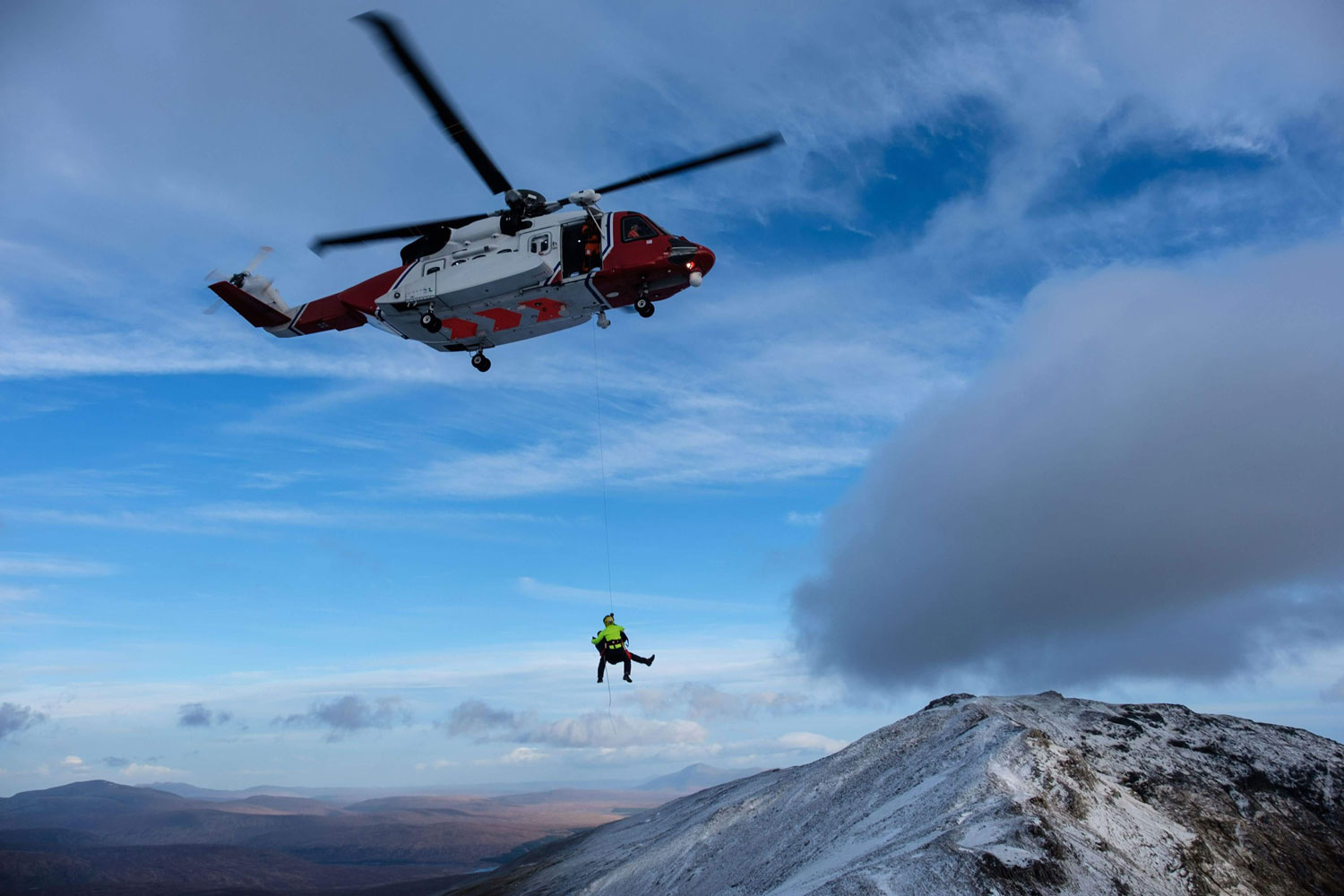
At sea, it may be the moment deteriorating weather, equipment failure or a change in a casualty’s condition turns a difficult task into an emergency. In business, it may be the moment a cash shortfall, legal claim, creditor action, operational failure or loss of stakeholder confidence moves an organisation from underperformance into genuine distress.
The change is not always dramatic. It may not arrive with an alarm, a board resolution or a formal insolvency filing. It is often visible first through smaller signals: information becomes less reliable, decisions take longer, leaders become defensive, lenders ask sharper questions and management teams begin to lose confidence.
The danger is rarely that every fact is invisible. It is that people continue to interpret a changed environment through the lens of yesterday’s assumptions.
“A search and rescue crew was tasked with recovering a casualty from a coastal location in deteriorating weather. The original plan was straightforward: assess the casualty, prepare them for extraction and move them to safety. Then the sea state worsened quickly and communications became less reliable. The casualty’s approximate condition was known, but the team could not be certain how quickly access routes would become unsafe or whether the weather would continue to close in. The decision was no longer simply how to execute the original plan. It was whether to preserve that plan or change it before the remaining safe options disappeared. The team reassessed, shared information, redistributed tasks and adapted early. Delay would have increased the risk to both casualty and crew.”
That is the defining feature of crisis: conditions can change faster than certainty can be created. Once that happens, the leadership task is no longer to preserve normality. It is to restore enough control, trust and direction for people to act before the window for recovery closes.
Search and rescue teams do not rely on people becoming exceptional when the alarm sounds. They rely on preparation: repeated training, technical competence, role clarity, disciplined briefing, equipment checks, exposure to difficult environments and the ability to recognise familiar patterns inside unfamiliar events.
Every shift begins with a structured brief. Roles are allocated. Weather, hazards, operational notices and known risks are reviewed. Equipment is checked systematically rather than assumed serviceable. Contingencies are discussed before they are needed. Core skills such as communications, casualty care, navigation, equipment use and team coordination are rehearsed until they remain accessible under pressure.
Businesses often take the opposite approach. They produce a crisis plan, place it on a server and assume documentation equals readiness. Yet a plan cannot tell an unprepared board how it will behave when cash is running out, facts conflict, advisers disagree and personal exposure becomes real.
A crisis plan is not crisis capability.
Capability exists when people understand escalation thresholds, know who holds authority, can access reliable information, have rehearsed how decisions will be made and can communicate under pressure without creating confusion or false reassurance.
In one composite business example, the board had a detailed crisis manual but no reliable 13-week cash flow, no agreed stakeholder map and no single decision cadence. When supplier pressure increased, directors met frequently but worked from different versions of the numbers. The business did not lack a document; it lacked an operating system for crisis.
The first lesson from search and rescue is uncomfortable:
Crisis performance is largely determined before the crisis begins.
Search and rescue professionals use a simple operating discipline: recognise, assess, control, act and reassess. It starts with accepting the environment as it is rather than as people hoped it would be.
An experienced rescue professional knows that a difficult task is becoming critical when the margin for error starts shrinking faster than the team can react. The warning signs may be technical, environmental or human: degraded communications, worsening weather, deteriorating casualty condition, fixation on one solution, delayed decisions or reduced communication within the team.
The same is true in business. Boards may continue discussing annual strategy while liquidity deteriorates weekly. Management may describe declining performance as temporary while suppliers shorten terms, lenders lose confidence and key employees begin to leave.
Three business alarm signals deserve particular attention: cash information is no longer trusted; decisions are repeatedly deferred; and stakeholders begin seeking assurance independently of management.
Denial is expensive because time behaves differently in crisis.
The sea does not wait for a crew to feel prepared. Cash, creditors, customers and markets do not wait for a board to become comfortable with the severity
of the problem.
The first duty of crisis leadership is recognition: naming the situation honestly and giving the organisation permission to operate differently.
A rescue team does not begin by designing the casualty’s long-term recovery. It first asks: What is the immediate threat? What is changing? What will make this worse? What must happen now? What can wait?
Turnaround leadership requires the same discipline. The first priorities are usually liquidity, operational control, legal exposure, critical people, stakeholder confidence and the cadence of decision-making.
The first task is not to solve every strategic problem. It is to stop the position deteriorating.
This matters because crisis environments encourage leaders to confuse activity with control. Long meetings, detailed presentations and multiple workstreams can create the appearance of movement while the underlying risk continues to grow.
Stabilisation identifies the few actions that protect the immediate position and create time for better decisions. But stabilisation is not recovery. Removing someone from immediate danger does not complete their treatment. In the same way, securing a short-term cash injection, calming a lender or delaying creditor action does not constitute a turnaround. It creates the conditions in which recovery can begin.
Effective command establishes who is leading, who owns each task, who monitors changing conditions, who communicates and when the plan will be reviewed.
Command matters in an emergency, but command is not shouting.
In search and rescue, the commander retains overall authority and risk ownership, but specialists lead within their expertise when technical decisions exceed the commander’s direct knowledge. Good command welcomes input. Read-backs, cross-checks and direct challenge prevent authority becoming ego or tunnel vision.
The same applies in the boardroom. A distressed business often contains overlapping advisers, uncertain directors, anxious lenders and exhausted managers. Without clear command, decisions are duplicated, delayed or quietly avoided. Different stakeholders receive different versions of the truth. Important issues fall between roles because everyone assumes someone else owns them.
A simple governance rhythm can transform the position: one daily control meeting, one agreed cash view, one decisions log, one owner and deadline for each action, and one set of stakeholder messages.
Strong crisis leadership establishes a rhythm: facts, options, decisions, actions, review.
That rhythm matters more than the performance of certainty. The leader does not need to pretend to know everything. The leader must make clear what is known, what remains uncertain, what happens next and when the position will be reassessed.
In rescue, technical competence is essential, but human factors often determine the outcome. Fear and fatigue slow processing and increase mistakes. Cold affects dexterity, communication and judgment. Cognitive overload causes people to miss information they would normally recognise.
A casualty may not absorb complex instructions. A team member may hesitate to disclose a concern. Decision fatigue may reduce judgment. A poor briefing or unsafe team culture may prevent someone from saying that the plan is failing.
Distressed businesses contain the same dynamics. Founders may freeze or become defensive. Finance teams may delay reporting bad news. Directors may argue over responsibility. Employees may lose confidence. Lenders may interpret silence as concealment.
For the professional, this may be another assignment. For the owner or director, it may be the worst period of their working life. That distinction must never be forgotten.
Human understanding is not separate from operational control. Frightened people absorb less information. Exhausted teams make poorer decisions. Shame suppresses bad news. Unclear communication produces uncoordinated action.
The moment people stop sharing bad news is the moment control begins to fail.
Psychological safety is therefore not a soft cultural extra. It is a source of operational intelligence. Teams must know they can raise concerns early, challenge a decision and admit what nearly went wrong without being punished for protecting the organisation.
No rescue operation begins with perfect information. Weather changes. Equipment behaves unexpectedly. A casualty’s condition deteriorates. Team fatigue increases. New information emerges while the plan is already being executed.
Someone must always maintain the wider operational picture while others execute. Conditions, risks and assumptions are continually reassessed. New information is communicated through established channels and brief updates. Plans change when facts change.
Turnaround situations are no different. Management information may be late or unreliable. Cash forecasts may contain assumptions that cannot be verified. Stakeholders may have conflicting interests. The board may have to act before the full commercial, legal or financial position is known.
Psychological safety is therefore not a soft cultural extra. It is a source of operational intelligence. Teams must know they can raise concerns early, challenge a decision and admit what nearly went wrong without being punished for protecting the organisation.
Waiting for certainty can become the most dangerous decision of all.
The appropriate standard is not perfection. It is a proportionate, defensible judgment based on the best available evidence, followed by disciplined reassessment as the evidence changes.
A decision that was sensible on Monday may no longer be appropriate by Friday. Cash moves, creditors harden, customers react, rumours spread and management capacity declines.
Disciplined adaptation is not uncontrolled improvisation. A good team can explain why the plan changed, what evidence triggered that change and how the revised approach was communicated.
The question is not simply, ‘Are we following the plan?’ It is, ‘Does the plan still fit the situation?’
Professional rescue teams do not finish when the immediate danger has passed. Handover includes the casualty’s condition, actions taken, outstanding risks and relevant observations. Documentation is completed while details remain fresh.
The debrief then asks: What happened? What worked? What nearly failed? What should change? Everyone is encouraged to contribute regardless of rank. The purpose is learning rather than blame.
Businesses are often less disciplined. Once immediate pressure reduces, there is a temptation to return quickly to normal. Yet if the underlying causes remain - weak reporting, poor governance, fragile supply chains, over dependence on individuals or avoidance of challenge - the next crisis may already be forming.
A composite example illustrates the distinction. One business secured short-term funding and avoided immediate creditor action, but retained the same unreliable reporting, unclear accountability and loss-making operating model. The crisis had been paused, not resolved. By contrast, another organisation used the post-crisis review to introduce weekly cash governance, clearer delegated authority, scenario planning and independent challenge. The emergency became the catalyst for a more resilient operating system.
A genuine turnaround continues beyond stabilisation. The organisation needs a credible plan, operational grip, financial discipline, governance, stakeholder confidence and, frequently, a more fundamental change to its operating model.
The rescue creates time. Recovery determines whether that time is used well.
The search and rescue operating cycle maps closely to the work of business recovery. BM&T’s Stabilise - Turnaround - Transform model is not a set of unrelated services. It reflects the operating sequence of recovery. Psychological safety is therefore not a soft cultural extra. It is a source of operational intelligence. Teams must know they can raise concerns early, challenge a decision and admit what nearly went wrong without being punished for protecting the organisation.
Crisis leadership is not about heroics. It is preparation, composure, communication, trained judgment and disciplined execution under pressure.
Search and rescue saves lives by restoring control in hostile environments. Turnaround management protects organisations, livelihoods and value by doing the same.
When the alarm sounds, the board does not need noise, theatre or abstract advice. It needs calm judgment, clear control and a credible route from danger to recovery.
When a business enters crisis, the board should ask:
Most organisations have considered what might go wrong. Far fewer have built and practised the capability required when it does.
Anton de Leeuw is Chief Executive Officer of BM&T European Restructuring Solutions and a Certified Turnaround Professional (CTP). He specialises in crisis management, corporate turnaround, and restructuring, serving as Chief Restructuring Officer (CRO), interim executive director, and independent non-executive director. Anton serves on the Haynes and Boone Crisis Management Board and is a Director of the Turnaround Management Association (TMA UK). He was named Turnaround Practitioner of the Year in 2022 and received the TMA Global Individual Excellence Award in 2025.
Andrew Cowx is a leadership and organisational development consultant with more than 30 years of frontline emergency medical experience, including 16 years as an award-winning Search and Rescue Paramedic Winchman. As a serving Paramedic Winchman and Flight Safety Officer, he has spent his career operating in high-pressure environments where effective leadership, clear communication, trust, and sound decision-making are critical. Drawing on real-world experience from safety-critical operations, Andrew helps organisations strengthen leadership capability, improve team performance, and build cultures of psychological safety. His work focuses on the practical application of human factors, situational awareness, communication, and decision-making, enabling leaders and teams to perform effectively in uncertainty and complexity.
Andrew Cowx Telephone: 07941 675689 Website: sandrcommunications.com
Andrew and Anton bring complementary perspectives from search and rescue and business recovery. They share two areas of focus.
The first is how leaders recognise when the operating environment has changed, make sound decisions without perfect information, restore control and build the capability required to perform when the margin for error is narrowing.
The second, Andrew and Anton work with boards, leadership teams, sports organisations and public-sector bodies to build and sustain high performance by aligning purpose, strategy, behaviours, structure, decision rights and learning systems into a coherent operating environment.
BM&T Turnaround & Crisis Leadership Forum
A curated series of dinners, roundtables and leadership conversations.
When time, cash and confidence are running short, we establish control and create clarity.
When advisory recommendations are not enough, we step into the business and lead delivery.
Once stability has been established, we help reposition the business for sustained performance and value.
BM&T can be appointed as:
Stay informed with expert perspectives, in-depth case studies and the latest industry news.
From turnaround strategies to financial restructuring trends, our resources help businesses navigate complexity with confidence.